Fandom & Collections
Fandom Activity Log Ideas That Go Beyond a Schedule
Record concerts, fan meetings, pop-ups, releases, theater visits, sports fandom, and personal reflections without burnout.
The short answer
A fandom activity log should record participation and meaning, not measure devotion. Use dated entries for events, lightweight collection lists for goods, optional spending categories, and reflection prompts about what gave you energy or caused stress.
Calendars tell you what happened, but they rarely explain why a day mattered. A fandom log becomes personal when it captures anticipation, people, choices, and the moments that shaped your relationship with an artist, team, work, or character.
Use activity types that match your fandom
Create a small set such as live event, screening, game, exhibition, pop-up, release, collection, and online event. Too many labels add maintenance. Add a new type only after you have several records that genuinely need it.
Record people and places
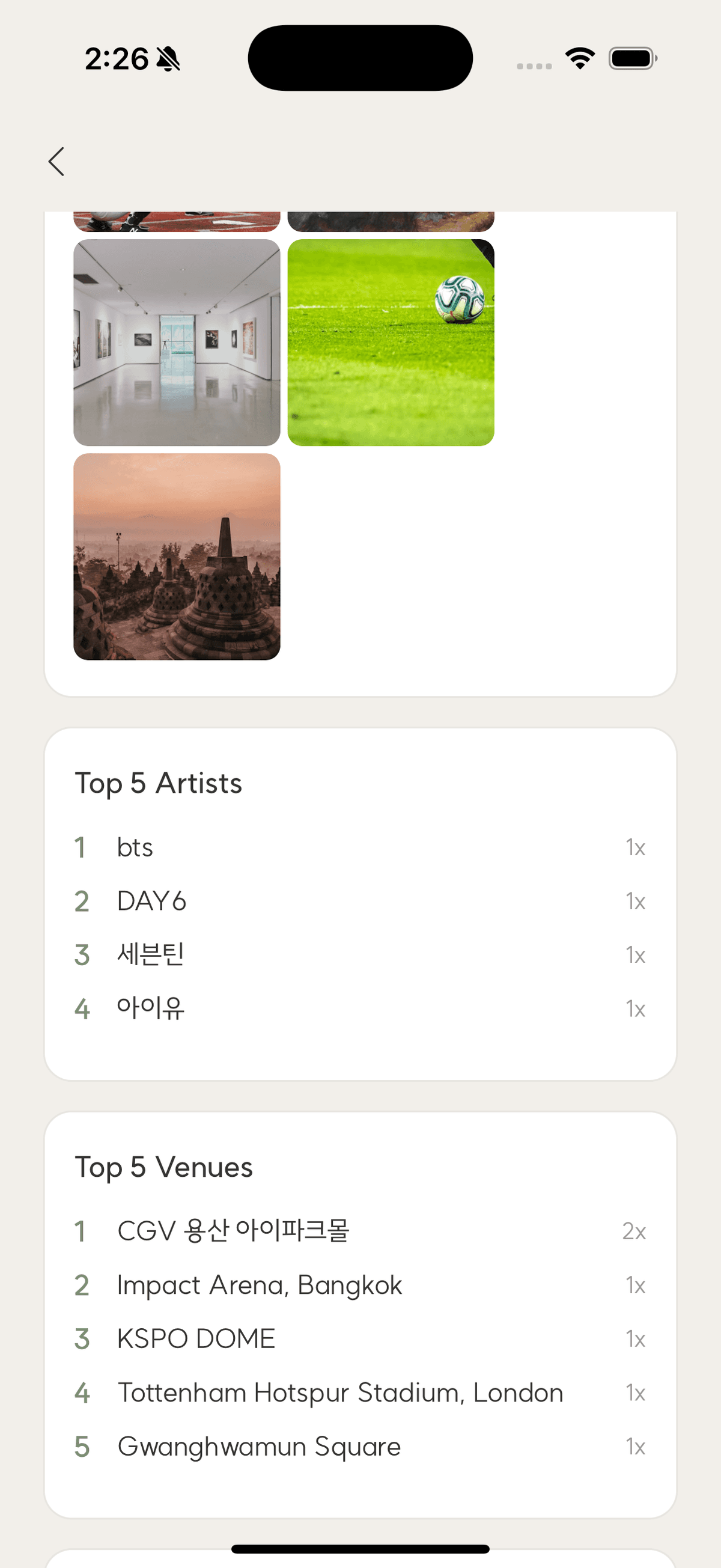
Companions, venues, cities, and communities often become as meaningful as the official event. Saving them makes it possible to remember first meetings, repeated routes, and the friends who shared each phase.
Include energy and boundaries
Add a simple note about energy, cost, or satisfaction when helpful. The purpose is not to rank yourself. It is to notice patterns such as overbooking, enjoyable small events, or travel that needs more recovery time.
Review highlights rather than totals alone
Counts are fun, but a top-five memory list explains more. At the end of a month or season, choose one event, one person, one object, and one lesson. This creates an archive that reflects growth rather than accumulation.
Checklist
Healthy fandom log
- Choose a few activity types
- Add people and places
- Write one meaningful detail
- Track cost only when useful
- Review energy as well as highlights
Fandom logging
Is tracking fandom too serious?
It can be playful and brief. Record only what helps you remember or make choices; skip metrics that create pressure.
Should planned and completed events be separate?
Yes. A plan helps logistics, while a completed entry preserves what actually happened and how it felt.
Can sports or theater fandom use the same system?
Yes. Change the category details—team and score, or production and cast—while keeping the same memory structure.
TicketShelf Editorial Team
Created by the team building TicketShelf, based on the real workflows people use to preserve tickets, photos, places, and the stories around them.
Updated August 2, 2026