
Ticket Archive
How to Organize Old Ticket Stubs Without Losing Their Stories
Sort paper tickets, wristbands, and digital confirmations into a searchable archive while preserving the memories attached to them.
The short answer
Organize old ticket stubs in two layers: protect the physical object, then create a searchable digital index. Give every ticket a date, event, venue, category, and short memory so the collection remains meaningful even if the paper fades.
A box of ticket stubs can feel precious and impossible at the same time. The goal is not to turn every piece into a museum object. It is to create a simple route from an anonymous scrap of paper to the day, people, and experience it represents.
Do a fast first sort
Separate tickets by broad category before you worry about exact chronology: concerts, sports, movies, exhibitions, travel, and other events. Put unidentified pieces in one temporary pile. A fast sort creates momentum and reveals which details are missing.
- Keep damaged tickets separate
- Do not tape directly onto printed surfaces
- Photograph thermal tickets early
- Match wristbands with nearby photo dates
Create a digital index
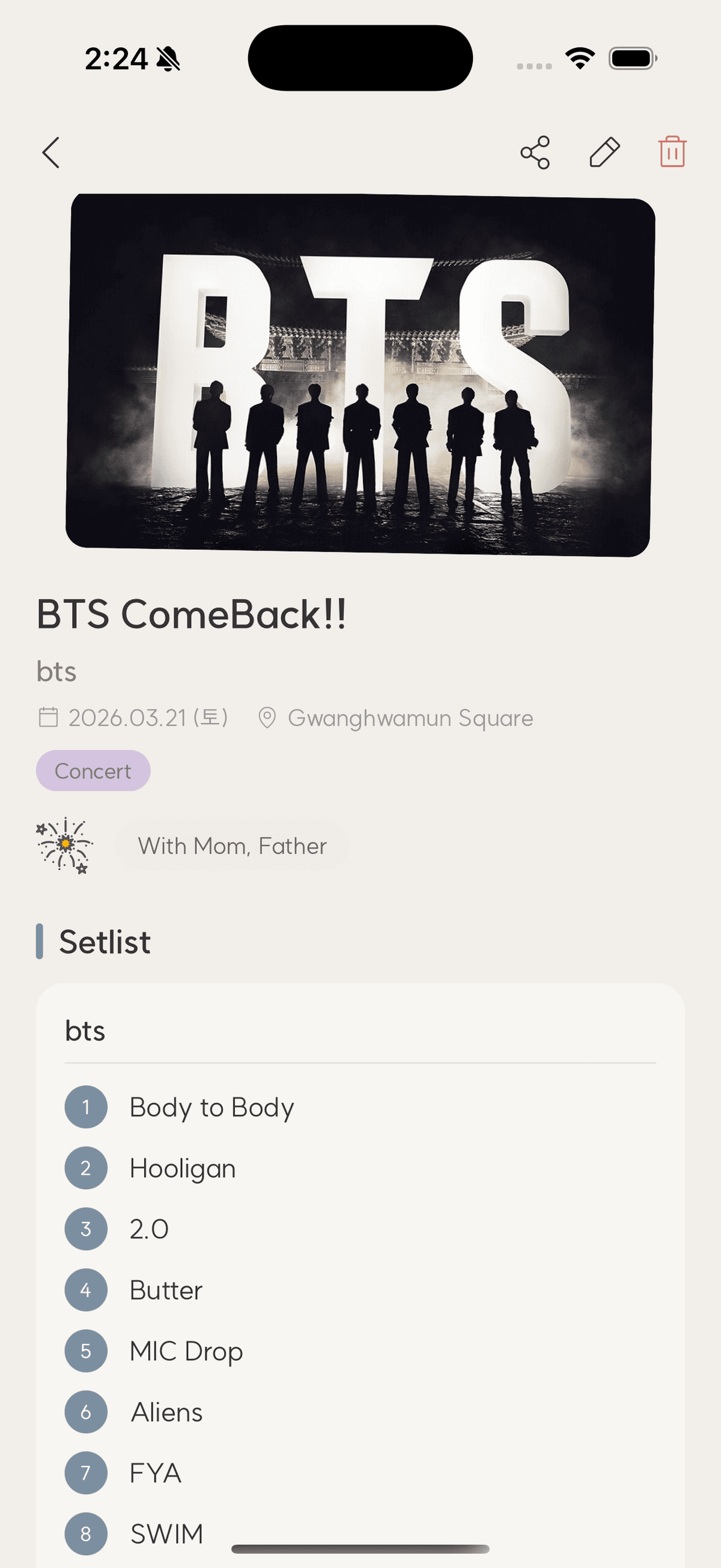
Photograph the front and back in even light. Record the printed facts, then add searchable context that the ticket does not contain, such as who attended, why the event mattered, and where related photos live. Use one consistent title format so duplicates are easy to spot.
Protect fragile paper
Thermal paper can darken or fade with heat, sunlight, pressure, and some plastics. Store valuable originals flat in archival-quality sleeves, away from direct sun and humidity. The digital copy is not a replacement for the object; it is insurance for the information.
Finish with the meaningful gaps
You do not need to identify every ticket immediately. Start with the ones that trigger a clear memory. For mystery stubs, search email, calendar, bank history, or photo metadata by the printed date and venue. Mark uncertain details rather than inventing certainty.
Checklist
Ticket sorting session
- Prepare category piles
- Photograph fragile tickets first
- Record date, event, and venue
- Add one memory or companion
- Store originals in safe sleeves
Organizing old tickets
What if the print has already faded?
Scan or photograph what remains, increase contrast on a copy, and reconstruct missing facts from receipts, calendars, and photos without altering the original.
Should tickets be sorted by date or category?
Use category for the first physical sort and date for the final index. A digital archive can offer both views without moving the originals.
Can I throw away the paper after scanning?
That is a personal choice. Keep originals with emotional or design value; a clear digital record lets you release routine confirmations without losing their stories.
TicketShelf Editorial Team
Created by the team building TicketShelf, based on the real workflows people use to preserve tickets, photos, places, and the stories around them.
Updated August 2, 2026